Influence Conference Brings Powerful Messages to Ministers, Leaders
ORLANDO, Fla. — The 2025 Influence Conference, held Tuesday afternoon at the Orange County Convention Center, found speakers offering powerful and challenging messages to ministers and church leaders. At times, the thousands in attendance, voiced their hearty agreement, while other moments were marked with silent contemplation as attendees reflected on how a challenging portion may apply to them and their ministries.
Jonathan Rivera, the campus pastor at Southeastern University in Lakeland, Florida, led off the conferences as he offered a generational perspective on 1 Samuel 3:1-10, the story of Eli and Samuel.
Noting how today’s churches are increasingly multigenerational, he shared a surprise experience when he entered the ministry — Samuel and Eli (in the church staff context) don’t always get along or they’re not always on the same page.
However, just as in the biblical account, Samuels and Elis need each other.
“I am a Samuel . . . I need Eli,” Rivera stated. “Samuel hears a voice, Eli does not . . . [however] Eli could discern what he (Samuel) could not. Wisdom is the capacity to know what to do with the knowledge you’ve been given.”
Yet, Rivera pointed out how it was the Samuel generation that many churches relied upon for creating the online presence for many ministries during the COVID lockdown.
“The story (Eli and Samuel) is an example that something powerful can happen when each generation needs what the other generation has,” Rivera said.
Stephanie Nance, the lead pastor of Chapel Springs Church in Bristow, Virginia (part of the Washington, D.C., metro area) challenged church leaders to be a bridge to carry people forward, warning not to confuse nostalgia with remembrance.
“Remembrance is vital to our faith,” she said. “Nostalgia is lies. Nostalgia wraps us in false security. Remembrance roots us in God’s faithfulness. And only one of these will prepare people for the days ahead.”
Nance urged leaders, that during these times of massive cultural shifts, to celebrate who God is and what God has done, while also ushering people to the Spirit who “empowers them to excavate the mysteries of tomorrow.”
Yet, she pointed out that Spirit-led churches required Spirit-sensitive shepherds. And the only way to accomplish that was to follow Jesus’ example of withdrawing to pray and listen.
Using Mark 1:29-39 as a backdrop, where the miraculous took place and the people were searching for Him the next morning, Jesus opted not to stay; instead, He followed His Father’s guidance of preaching throughout the region.
“Jesus refused to let yesterday’s success override today’s assignment,” Nance said. “So must we.”
After sharing her personal testimony, how only through withdrawing to pray, listen, and wait did she come to confidence in her calling, she challenged ministers to know their true calling.
“Your calling is to Jesus,” she stated. “Everything else is obedience. When that’s securely rooted in you . . . no matter how much the culture shifts and changes and goes to absolute chaos, you’ll keep leading people straight to the heart of Jesus.”
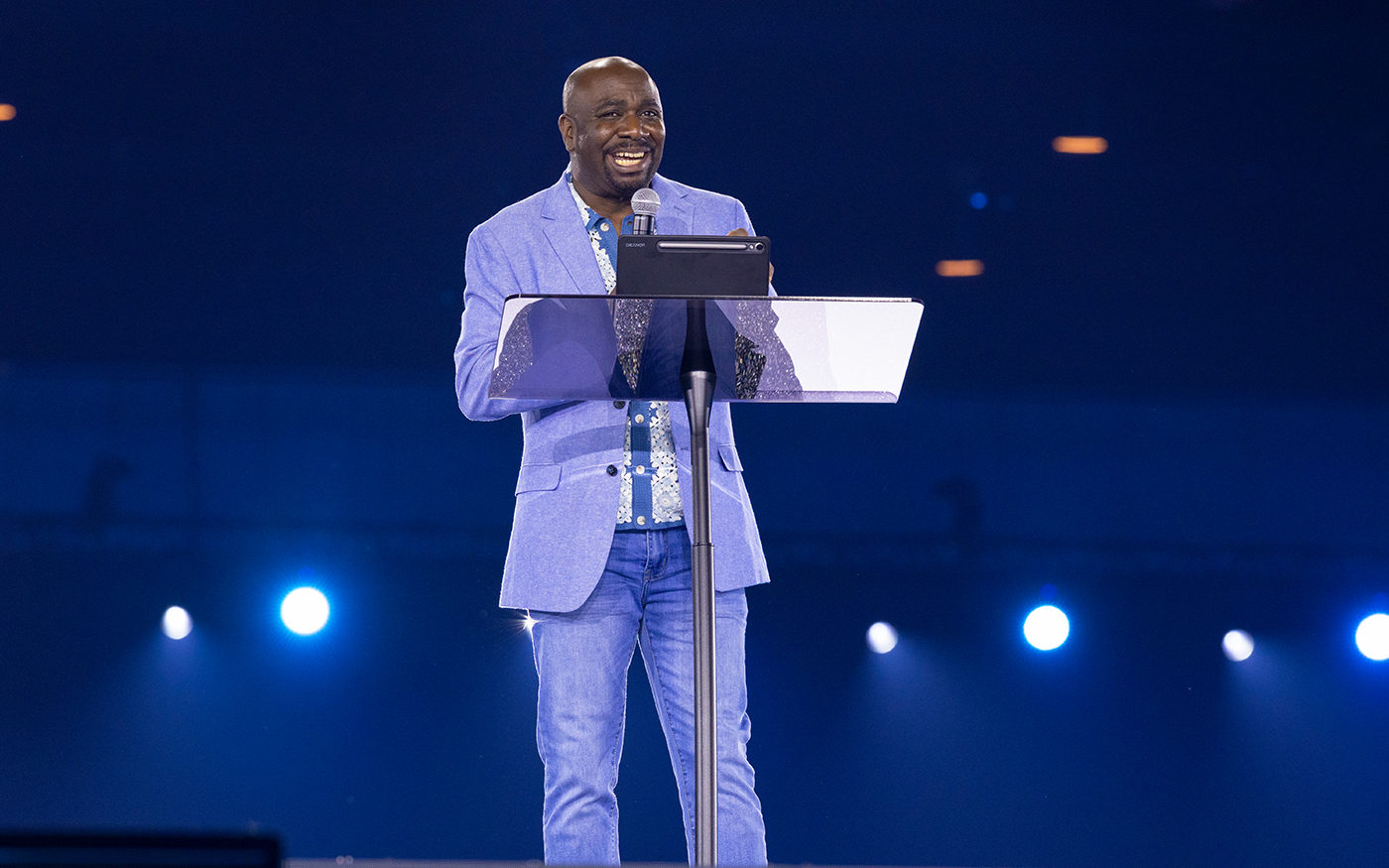
After Dick Eastman was presented with the 2025 Influencer of the Year Award (click here for article), Renea Brathwaite, Vanguard University’s dean of the School of Theology and Ministry and chief diversity officer in Costa Mesa, California, addressed attendees.
Speaking on the issue of being theologically rooted and relevant, Brathwaite used results of a Barna Research Group survey that found formerly universally known truths about Christianity are now mysteries to a large sector of Americans.
“The lack of biblical and theological literacy leads to a misunderstanding of worship, misapplication of faith in daily life, and dilution of core doctrines, which means that discipleship becomes nearly impossible,” Brathwaite said.
As he urged ministers and leaders to devote themselves to staying grounded in studying the Word, he went on to explain what theology matters to God, to believers, and to churches.
Theology (the study of God and of God’s relation to the world) matters to God because it shapes the way we view God and His work, Brathwaite stated, transforming our worship, giving us a new language and ways to express adoration, and enlarging our vision — helping us to discern what God can do beyond our limited conventional thinking.
As for Christians, it’s a choice between good theology or bad theology — one formed and informed by Scripture or something “cobbled together” haphazardly.
“The decision to pursue good theology — embodied in the question, ‘Who are you, Lord?’ (Acts 9:5) — this marks the most significant transition of our lives,” Brathwaite said.
And in too many churches, the pursuit of “relevance” has led to congregations with poor theology and being fed biblical “baby food.”
“They want more! They deserve more from us,” Brathwaite said emphatically. “They want you to be rooted and relevant for them.”
As Brathwaite drew to a conclusion, he shared a story how his pastor, Mother Taylor (in Barbados), urged him to attend seminary to further his theological understanding.
“She said, ‘Renea, you are an axe in God’s hands. God will use you because of your devotion. But know this: the sharper you are, the deeper the cut. God’s job is to wield you as His instrument; your job is to make sure that you are as sharp as possible.’”
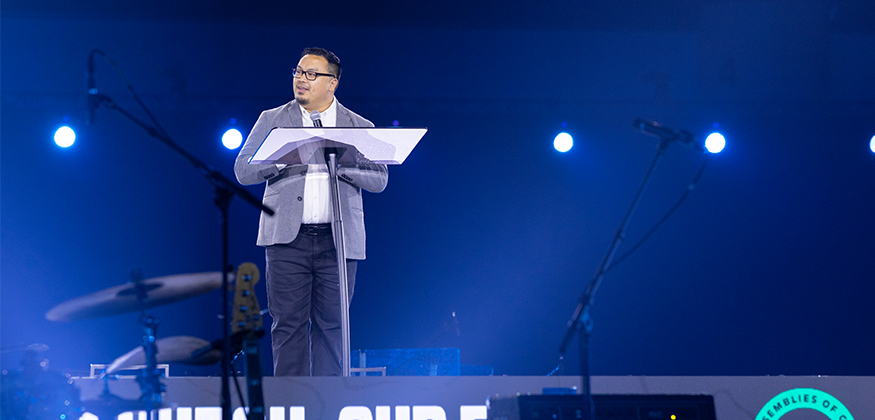
Teng Vu, lead pastor of Life in Christ Church, Maplewood, Minnesota, and president of Hmong AG Fellowship, followed with a message on intercultural leadership and the importance of a loving, compassionate church and providing “a seat at the table.”
He shared how churches offered tangible help to his parents who arrived in the U.S. from Vietnam.
“The Church showed my family the love of Christ way before we even fully understood the gospel,” Vu said. “The seeds of faith were planted in that season because someone made room for us even when we had nothing.”
He then shared how the journey for many is similar: an invitation to the table, which then moves to having a voice at the table, and ultimately making room for others.
“That’s when we realize we’re not just guests — we’re part of the family,” he explains.
“Intercultural leadership isn’t just about looking diverse,” Vu stated, “It’s about discipling across cultures. It’s about creating systems and spaces where everyone — regardless of background — can be empowered to lead.”
Vu encouraged attendees to listen — working to understand each other’s stories.
“Look around,” he said. “If you’re leading, ask who’s still waiting for their voice to be heard.”
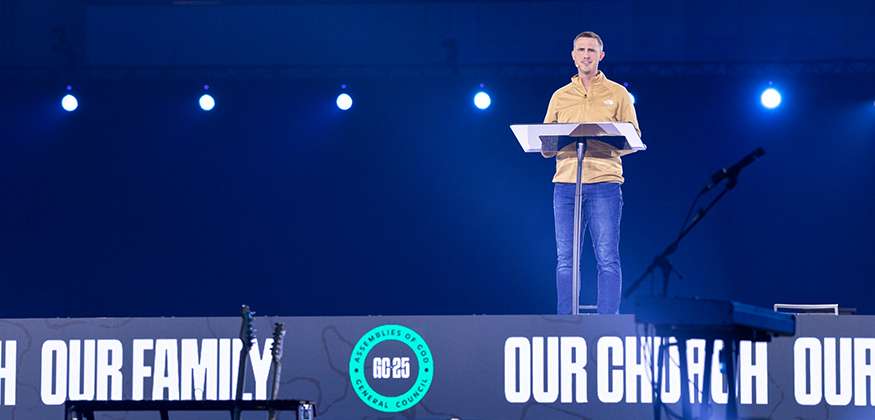
In the conference’s final session, Jason Patterson, lead pastor of Parkside Church in Fishers, Indiana, spoke to leaders about self-awareness, specifically about the walls people — ministers such as himself — build.
Reading Matthew 22:37-40, his focus was the last words of “love your neighbor as yourself.”
He explained that the better we know Jesus, the easier it is to love Him.
“When it comes to our lives, it’s the reverse,” he said. “The more I learn about me, the harder it becomes to love myself, because I discover how flawed I am.”
Patterson admitted that in an attempt to not deal with the things he doesn’t want to see or how they make him feel, he builds walls.
He shared how he learned he was very insecure and how planting Parkside Church was a difficult season for him as he came to realize he was a very emotionally immature person.
“A friend gave me a book . . . on the cover it says, ‘It’s impossible to be spiritually mature while remaining emotionally immature,’” he recalled. “I was like, Oh great, now I’ve got another problem — now I’m spiritually immature!”
The wall building continued.
“I was struggling with Jesus’ command to love myself because I didn’t want to learn about myself,” Patterson said.
According to Patterson, the risk of fighting against awareness and learning about one’s self by building walls is three-fold:
• Disobedience to Jesus — loving yourself is a command, not an option . . . “If we love right, we can get a lot right, if we love wrong, we’ll struggle to get anything right.”
• Forfeiting further transformation — what the Holy Spirit can’t reveal to us, the Holy Spirit can’t use to transform us. “What I’ve been learning is that if we will embrace His truth about us, we will be embraced by His grace for us.”
• We risk living and leading from insecurity and immaturity — and a lot of people get hurt. “It’s (hurting people) an unintentional byproduct of building walls and not dealing with the difficult things God might be trying to show us about ourselves in our journey to love ourselves as He does.”
Patterson said he believes that transformation is possible, but not inevitable; it takes work.
He advised to first take ownership of the walls built — admitting he builds walls in ways to blame someone else.
“If I don’t own it, I’m not responsible for taking it down,” he explained.
He then shared how another minister had verbally denigrated him, but instead of dealing with it, he built a wall around the pain and the anger, and blamed the other minister. In the end, the unresolved pain started turning him into the same kind of leader who hurt him!
The answer, he says, is to run toward the truth about yourself and then tell yourself the truth.
“One way to run towards the truth is by surrounding yourself with truth-tellers,” Patteron said. “You need people in your life who pairs together the same two things Jesus does — His truth and His grace.”
He also advised that instead of listening to the negative thoughts going through your mind, talk to yourself — sometimes you’ve got to preach to yourself.
“In order to tear down walls, you’ve got to stop listening to the lies that helped you build them,” he said.
“The problem is if we live and lead from insecurity, we need a gift from everyone around us,” Patterson said. “We need them to affirm us, applaud us, and appreciate us . . . but when we are on the journey to self-awareness and learning to love ourselves the way Jesus commanded, when He is helping us to become like Him, we begin to lead from security, then our life becomes the gift to everyone around us.”
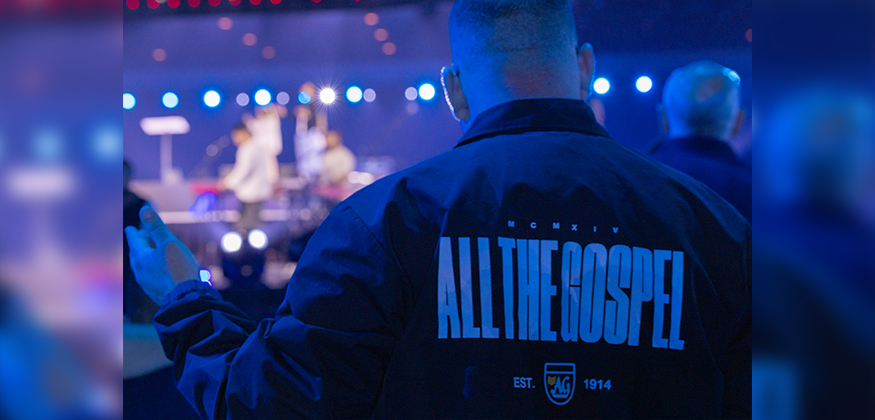
Patterson concluded the service, asking those who struggle with building walls to come to the altar, with General Superintendent Doug Clay then asking for others to come to pray over the ones who stepped forward.
Radiant Collective Worship of Radiant Church in Tampa Bay, Florida, provided the worship music for the afternoon session. Florida Multicultural District Superintendent Abner Adorno and his daughter, Melody Adorno, creative pastor for Viva Church, served as conference hosts.
The evening Influence service was a combined generations service featuring singer/songwriter Natalie Grant, leading in songs of worship and praise to a packed house.
LEAD PHOTO: Renea Brathwaite
LOWER PHOTO #1: Teng Vu
LOWER PHOTO #2: Jason Patterson